August 9, 2026
The Anatomy of a Craving, Explained Like Weather
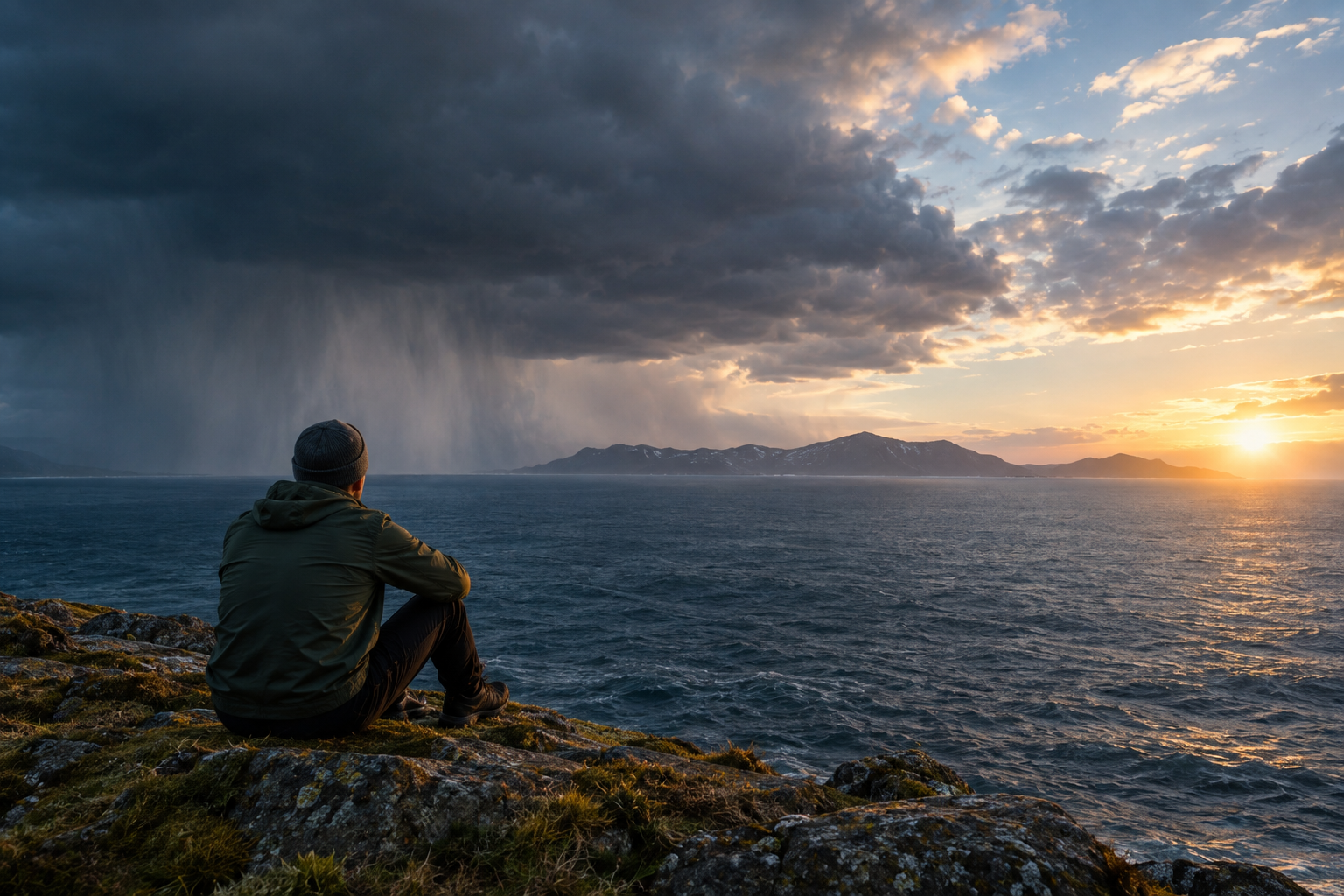
Weather is a surprisingly useful way to think about a craving, and not just as a metaphor. The shape is genuinely similar: pressure builds gradually, sometimes so slowly you don't notice it happening. It reaches a peak that feels, in the moment, like it might never end. And then, almost always, it passes — not because you defeated it, but because that's simply what weather systems do.
Most people experience a craving as a flat, undifferentiated wall of wanting, which makes it feel unbeatable. But a craving actually has a shape, and knowing the shape changes the experience of living through it. There's a build-up phase, where a trigger — a place, a feeling, a smell, a stray thought — starts to pull attention toward the old pattern. There's a peak, usually shorter than it feels, where the pull is at its strongest and the moment feels urgent in a way that seems like it demands an immediate decision. And there's a decline, where the intensity fades, often faster than anyone expects, whether or not anything was done to fight it.
This matters because the peak lies to you about its own length. In the middle of it, a craving convinces you it's a permanent condition rather than a temporary weather event. That's the nature of intense feelings in general — they're terrible at estimating their own duration. Fear does this. Anger does this. A craving does it especially well, because it has a very specific interest in convincing you that giving in is the only way the discomfort will end.
It isn't. Cravings that aren't acted on reliably fade on their own, usually faster than the version playing out in your head predicts. This isn't wishful thinking; it's simply how the underlying biology tends to behave. A storm doesn't need you to do anything for the pressure to eventually drop. It drops because that's what the pattern does, given enough time.
What this means practically is that a craving doesn't need to be defeated so much as outlasted. You don't have to win an argument with it. You don't have to prove it wrong through force of will. You mostly just have to get through the part where it's loud, the same way you'd wait out a storm rather than trying to physically fight it — find some shelter, let a little time pass, and trust that the sky, like it usually does, will eventually clear.
Knowing the shape in advance is its own kind of shelter. When the pressure starts building, it helps to recognize what's happening: this is the build-up, not the whole story. When it peaks, it helps to remember: this is the loudest it's going to get, and loudest doesn't mean longest. And when it starts to fade, which it will, that fading is worth noticing too — proof, gathered firsthand, that the forecast was right again.
Every craving that passes without being acted on adds to a private, growing body of evidence: that the storms, however fierce they feel in the moment, do end. That evidence is worth more than it might seem in the middle of a hard hour. It's the kind of thing you can stand on, the next time the sky starts to change.
Most people experience a craving as a flat, undifferentiated wall of wanting, which makes it feel unbeatable. But a craving actually has a shape, and knowing the shape changes the experience of living through it. There's a build-up phase, where a trigger — a place, a feeling, a smell, a stray thought — starts to pull attention toward the old pattern. There's a peak, usually shorter than it feels, where the pull is at its strongest and the moment feels urgent in a way that seems like it demands an immediate decision. And there's a decline, where the intensity fades, often faster than anyone expects, whether or not anything was done to fight it.
This matters because the peak lies to you about its own length. In the middle of it, a craving convinces you it's a permanent condition rather than a temporary weather event. That's the nature of intense feelings in general — they're terrible at estimating their own duration. Fear does this. Anger does this. A craving does it especially well, because it has a very specific interest in convincing you that giving in is the only way the discomfort will end.
It isn't. Cravings that aren't acted on reliably fade on their own, usually faster than the version playing out in your head predicts. This isn't wishful thinking; it's simply how the underlying biology tends to behave. A storm doesn't need you to do anything for the pressure to eventually drop. It drops because that's what the pattern does, given enough time.
What this means practically is that a craving doesn't need to be defeated so much as outlasted. You don't have to win an argument with it. You don't have to prove it wrong through force of will. You mostly just have to get through the part where it's loud, the same way you'd wait out a storm rather than trying to physically fight it — find some shelter, let a little time pass, and trust that the sky, like it usually does, will eventually clear.
Knowing the shape in advance is its own kind of shelter. When the pressure starts building, it helps to recognize what's happening: this is the build-up, not the whole story. When it peaks, it helps to remember: this is the loudest it's going to get, and loudest doesn't mean longest. And when it starts to fade, which it will, that fading is worth noticing too — proof, gathered firsthand, that the forecast was right again.
Every craving that passes without being acted on adds to a private, growing body of evidence: that the storms, however fierce they feel in the moment, do end. That evidence is worth more than it might seem in the middle of a hard hour. It's the kind of thing you can stand on, the next time the sky starts to change.