What Is Sober October? And Why It Belongs to Everyone
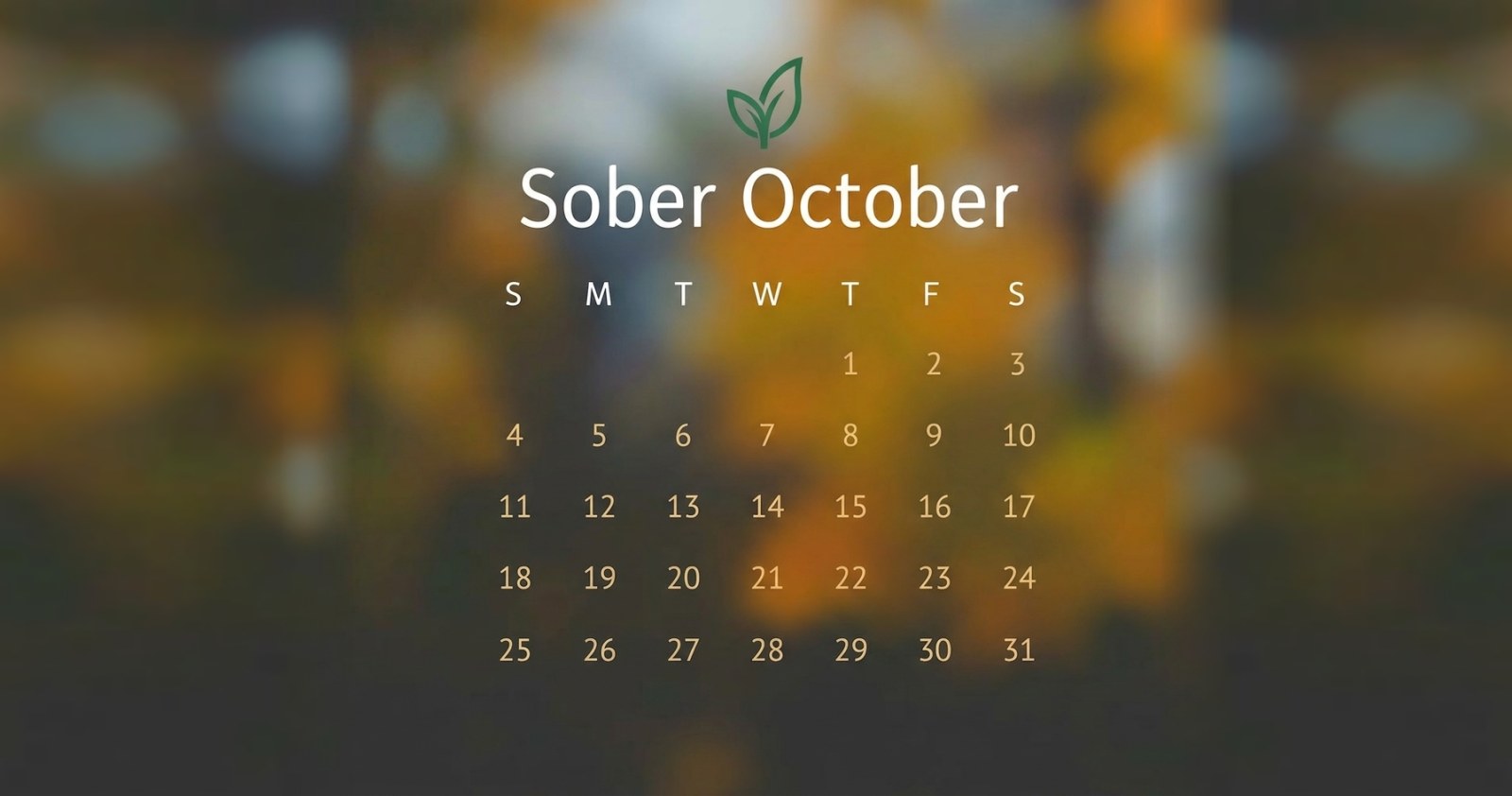
Sober October is thirty-one days without alcohol, starting on the first of October and finishing on the thirty-first. That's the entire rulebook. There's no membership, no verification, no governing body, and nobody to report to at the end — which sounds like a weakness until you notice it's the reason the thing spread at all.
It didn't begin that way. It started as a sponsored fundraiser: an Australian version in 2010, then a British one in 2014 that gave the month the name most people now use. The mechanics were the ones every charity challenge uses — sign up, collect pledges, stay dry, prove it by showing up on the first of November still sober. The month wasn't the product. The sponsorship was.
What happened afterwards is the interesting part. The name got away from the fundraiser. Within a few years people were doing Sober October without registering anywhere, without raising a penny, and often without knowing there had ever been a charity attached to it. It drifted into the same category as Dry January — a thing on the calendar that belongs to no one, and therefore to everyone, which you can join by simply deciding you have.
That makes the growth genuinely hard to measure, and the difficulty is itself the evidence. The only participants anyone can count are the ones who signed up to something. Everyone else — the larger group by a wide margin now — left no trace at all. A practice that can't be counted because most of the people doing it never told anybody is a practice that has outgrown its origin.
The practical consequence is that nobody can tell you you're doing it wrong. There's no minimum standard, no disqualification, no asterisk for starting on the third because the first was a wedding. If you drink on day nineteen, nothing happens; the month doesn't void, because there's no authority to void it. You've had eighteen days you wouldn't otherwise have had, and the nineteenth is a data point rather than a verdict. That's a considerably healthier frame than most of what gets built around drinking.
The one thing that isn't optional is a medical caution, and it applies whatever version you're doing. If you drink heavily every day, stopping abruptly can be dangerous rather than merely unpleasant — alcohol is one of the few substances where withdrawal can be serious on its own. That's a conversation with a doctor before the first, not a reason to skip the month.
Beyond that, the month is yours to define. October the first is a clean line to start from, and its usefulness comes precisely from being arbitrary — there's nothing to negotiate with, and no one to ask. The counting starts when you say it does.